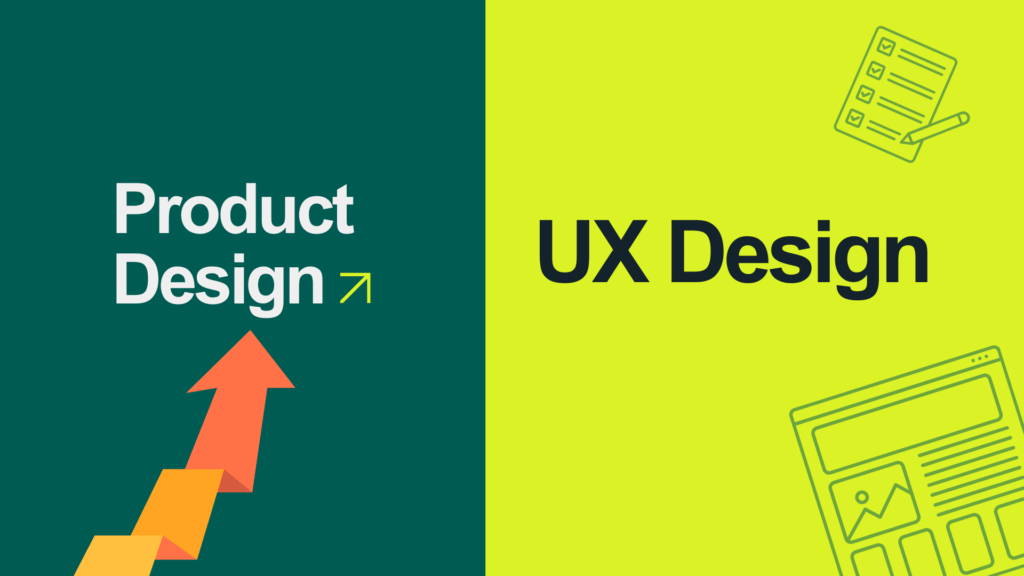
If you’re building a digital product, whether it’s a SaaS tool, mobile app, or B2B platform, you’ll often come across two key roles: Product Designer and UX Designer.
While they may seem similar, each role brings a different perspective to the design process. Both are involved in shaping user experiences, but their focus, responsibilities, and methods differ in important ways.
Product Designers typically take a broader approach. They think about the overall product, how features align with business goals, and how the product fits into the market. Their role includes strategy, planning, and working with different teams to guide the product from concept to launch.
UX Designers, on the other hand, focus on how users interact with the product. They work on improving usability, ensuring tasks are easy to complete, and making sure the product feels intuitive. Their job is to remove friction and help users reach their goals effectively.
In this article, we’ll explain what makes each role distinct, where they overlap, and when you might need one over the other, or both. You’ll also find comparisons, examples, and practical guidance if you’re hiring or building a digital team.
What Is Product Design?
Product design is the process of planning, creating, and improving a product with the goal of making it valuable, usable, and relevant to its intended users. Unlike graphic design or visual design, which focus on aesthetics, product design goes much deeper. It brings together strategy, functionality, and user needs to shape the full product experience.
In today’s digital world, product designers don’t just work on how things look. They define how the product should function, what problems it should solve, and how it fits into the broader business strategy. They consider the entire product lifecycle — from ideation to launch to iterations based on feedback.
Whether it’s a mobile app or a web-based SaaS platform, product designers ensure every feature serves a purpose and supports the product’s goals. They’re responsible for turning business ideas into tangible, functional solutions that deliver value to users and to the company.
Modern product designers commonly work on:
- SaaS applications and web platforms
- Mobile applications
- IoT-enabled smart devices
- End-to-end product ecosystems that span multiple touchpoints
Their role continues to evolve as businesses demand smarter, scalable, and more user-centric solutions.
Core Skills of a Product Designer
A strong product designer brings together design thinking, business awareness, and technical fluency. Here’s what the role typically includes:
- Translating product goals and business needs into design decisions
- Conducting market and competitor analysis
- Performing user research to uncover real-world problems
- Creating low-fidelity sketches, high-fidelity wireframes, and interactive prototypes
- Working with engineers, marketing teams, and stakeholders to ensure alignment
- Managing roadmaps and feature prioritization with a focus on business outcomes
- Mastery of tools like Figma, Adobe XD, Miro, and CAD-based platforms
What Is UX Design?
UX Design, or User Experience Design, is focused on how people interact with a digital product. It’s about making things feel intuitive, accessible, and even enjoyable. If product design shapes what a product is and does, UX design ensures that it’s usable and effective for the people who need it.
Great UX doesn’t just make a product work — it makes it work well for the user. From a simple button click to a complete onboarding journey, UX design ensures that every step feels natural and supports the user’s goal.
UX design is important because it influences how users feel about the product. A confusing interface can lead to frustration, while a smooth experience builds trust and loyalty.
UX design is typically applied to:
- Websites and SaaS platforms
- Mobile apps and digital products
- User flows such as signup, onboarding, and checkout
- Navigation systems and dashboards
- Micro-interactions, modals, and content structure
UX designers ensure that the product is functional, intuitive, and responsive across devices and platforms.
Core Skills of a UX Designer
UX designers focus on interaction, behavior, and structure. Their work involves:
- Conducting qualitative and quantitative user research
- Creating user personas to guide design decisions
- Mapping complete user journeys and identifying friction points
- Designing wireframes and interactive prototypes
- Facilitating usability tests and gathering feedback
- Structuring content and organizing interfaces for better flow
- Ensuring accessibility and inclusivity for all users
- Using tools like Figma, Sketch, InVision, Adobe XD, UXPin
They collaborate closely with product teams to ensure that users’ needs are represented and respected in every decision.
Similarities Between Product Design and UX Design
While product design and UX design serve different purposes, they share several key similarities. These overlaps often lead to collaboration between the two roles, especially in teams that value user-centric product development. Below are some of the core similarities that make these two design functions deeply complementary:
| Similarity | Description |
|---|---|
| User-Centered Approach | Both prioritize understanding and solving real user problems through research and feedback. |
| Design Thinking | They follow an iterative, test-driven process rooted in problem solving and innovation. |
| Visual Communication | Wireframes, prototypes, and flows help communicate and validate ideas visually. |
| Attention to Detail | Small design choices can greatly impact usability, engagement, and perception. |
| Creativity | Both roles require original, out-of-the-box thinking to solve complex product challenges. |
| Cross-Team Collaboration | Designers often work with developers, analysts, and business leads across the project lifecycle. |
| Forward Thinking | Anticipating future use cases, edge scenarios, and user needs is key in both roles. |
| Tools & Prototyping | Tools like Figma, Sketch, and InVision are common in both roles for creating and testing designs. |
Even with distinct focuses, UX designers and product designers share a mutual mission — improving the user’s experience with solutions that are thoughtful, functional, and scalable.
Key Differences Between UX Design and Product Design
Despite their overlap, product design and UX design differ in purpose, tools, and impact. Understanding these distinctions can help companies assign the right talent at the right time, and help professionals decide which path suits them best. Here’s a side-by-side breakdown of how the two disciplines differ:
| Area | Product Design | UX Design |
|---|---|---|
| Scope | Covers the complete product lifecycle, from business goals to execution | Focuses on how users interact with specific touchpoints of the product |
| Mindset | Balances business strategy with user needs | Entirely user-first, prioritizing usability and satisfaction |
| Goals | Aligns product features with market demands and technical feasibility | Designs flows and interfaces that feel intuitive and effortless |
| Process | Involves product research, roadmapping, testing, and rollout planning | Involves user research, wireframes, usability testing, and refinement |
| Skills | Market analysis, product definition, systems thinking, concept design | Wireframing, user flows, A/B testing, accessibility, UX writing |
| Tools | Tools for product management and development planning | Tools for interaction design, prototyping, and UX validation |
| Metrics | Tracks business growth indicators like retention, churn, and engagement | Measures success via user satisfaction, completion rate, and error reduction |
| Timeline | Works across long-term milestones and product evolution | Works in short cycles focused on continual optimization and testing |
Each discipline serves a specific purpose. While product designers steer the big-picture strategy, UX designers fine-tune the experience users have with the product day to day.
Example Scenarios: UX vs Product Thinking
To bring these roles into sharper focus, let’s look at how product designers and UX designers might approach the same design challenge from different angles. These examples highlight how both mindsets complement one another when solving real-world design problems:
| Design Focus | UX Perspective | Product Perspective |
|---|---|---|
| Navigation | Make it effortless for users to find what they need with minimal effort | Structure the layout around business goals and user behavior data |
| Interaction | Ensure buttons, links, and menus work intuitively and reduce user errors | Design interactions that are scalable and easy to build and maintain |
| Visual Language | Use visual hierarchy and microcopy to guide users and create trust | Ensure a consistent visual system aligned with branding and long-term goals |
| Accessibility | Design for all users, including those with visual, motor, or cognitive impairments | Make the product usable in a wide range of settings and devices |
| Feedback | Provide clear confirmations or error states for every action | Implement feedback systems that reinforce behavior and reduce friction |
Both UX and product design play a role in shaping user behavior, enhancing usability, and delivering value. Their perspectives are different, but necessary to create products people love and use often.
Who Should You Hire: Product Designer or UX Designer?
Choosing the right designer depends on the stage of your product and the type of challenges you’re trying to solve.
Hire a product designer if:
- You’re still shaping your product idea or MVP
- You need help aligning features with market and business goals
- You want support in defining functionality, structure, and feasibility
Hire a UX designer if:
- Your product already exists and needs usability improvements
- You want to optimize user flows or conversion paths
- You’re focused on interaction design, interface polish, or user testing
In many cases, you’ll need both.
- Product designers bring the strategy and structure
- UX designers focus on interaction and usability
- Together, they help you build a product that not only works but feels right to the user
At Bilzimo, we don’t treat these as separate services. Our team blends UX and product thinking to deliver solutions that perform well, scale smoothly, and actually solve problems.
Where Are These Roles Headed?
As product teams become more interdisciplinary and tools become more collaborative, the line between UX and product design is narrowing. Designers are increasingly expected to be fluent in both strategic thinking and user-centered workflows.
Today’s design tools like Figma, Framer, and FigJam are reshaping how teams work. They enable product and UX designers to prototype, collaborate, and test ideas in real time, often together.
Some of the biggest shifts happening in both roles include:
- Designing for AI and new interface types: More products are integrating conversational interfaces, automation, and AI-powered features.
- Greater focus on accessibility and inclusion: Teams are actively working to create designs that serve all users, regardless of ability.
- Cross-platform design systems: Whether users are on desktop, mobile, or wearables, experience consistency is becoming non-negotiable.
- Product analytics driving design decisions: Tools like Hotjar and FullStory are helping teams map user behavior and tie those insights directly into design improvements.
The takeaway? Both UX and product designers are being asked to think more broadly, not just about visuals or flows, but about long-term impact, user retention, and real business value.
UX design and product design aren’t competing disciplines — they’re collaborators. They approach problems from different angles, but they share one goal: to build products that serve people well.
Understanding the difference between the two isn’t just helpful for hiring or learning — it helps build stronger teams, set the right expectations, and ultimately create products that work better for everyone.
And if you’re working on a B2B platform, SaaS tool, or digital product and need support across both strategy and experience, our team at Bilzimo would be happy to help.